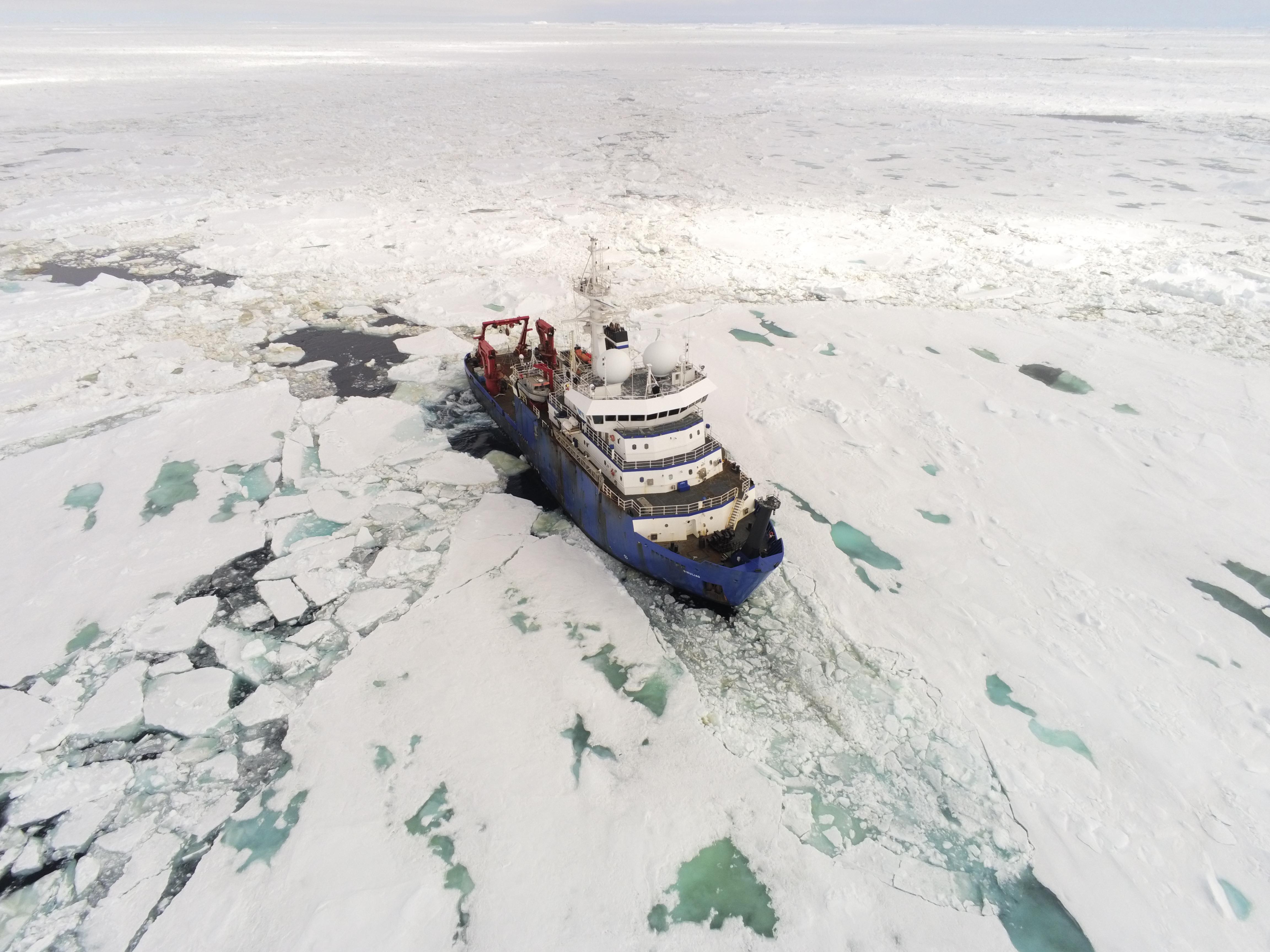
For four or five days, the research vessel barely moved.
Locked in Antarctic sea ice, the ship crept forward only about 100 yards a day as researchers waited for conditions to improve. For many aboard, the delay was frustrating. But for Rose Malanga and her advisor, professor Ellen Buckley, the ice was exactly what they had come to study.
For Malanga, then a first-year PhD student in the Department of Earth Science and Environmental Change at the University of Illinois Urbana-Champaign, the expedition offered a chance to study something she had previously observed mostly through satellite imagery: the different processes that cause sea ice to form and grow, and whether those processes are changing as the climate changes.
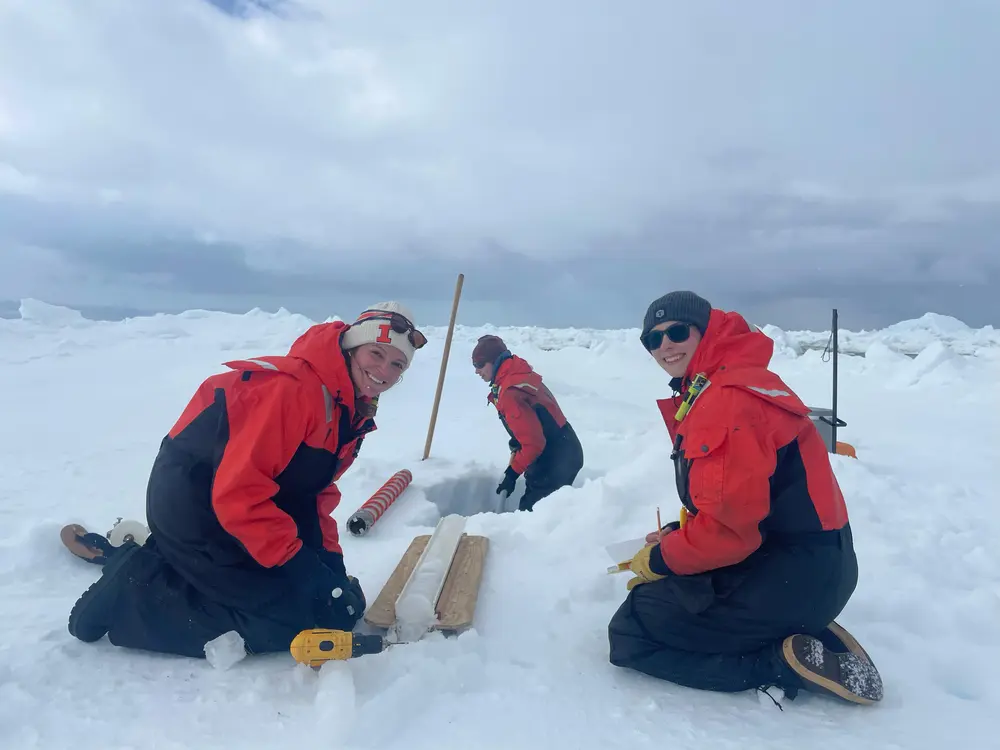
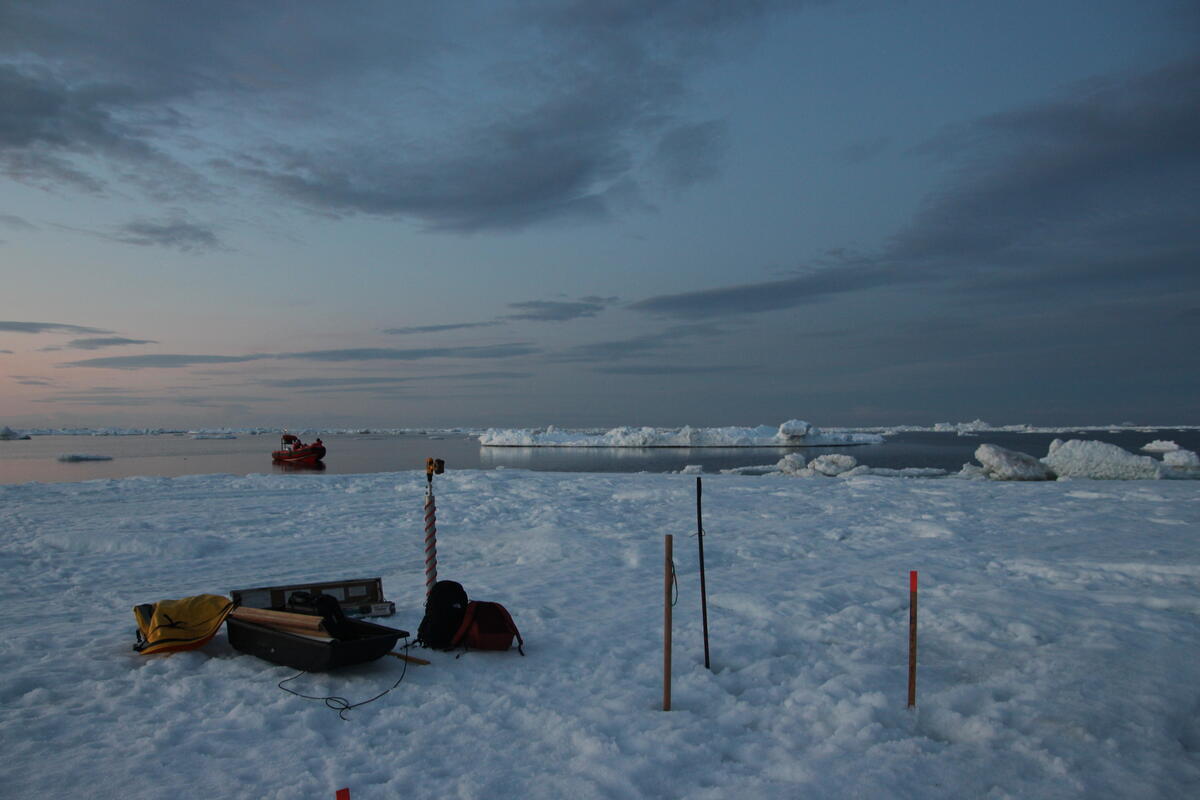
Each morning before sunrise, Malanga and Buckley climbed to the ship's bridge to scan the ice below for a stable floe where they could collect samples. Once they identified a suitable patch of sea ice, they boarded a small Zodiac raft and headed out across the water, searching for ice thin enough to drill through but stable enough to stand on safely.
“It was awesome,” Malanga said. “I think the craziest part was that you wouldn't really feel that you were moving on it, but if you looked out to the horizon, you could see that you were bobbing up and down.”
Out on the ice, the silence was almost complete.
“If you were not making a noise, if the Zodiac engine was turned off, it was just the sound of the water lapping,” she said.
The wildlife, however, was far less quiet.
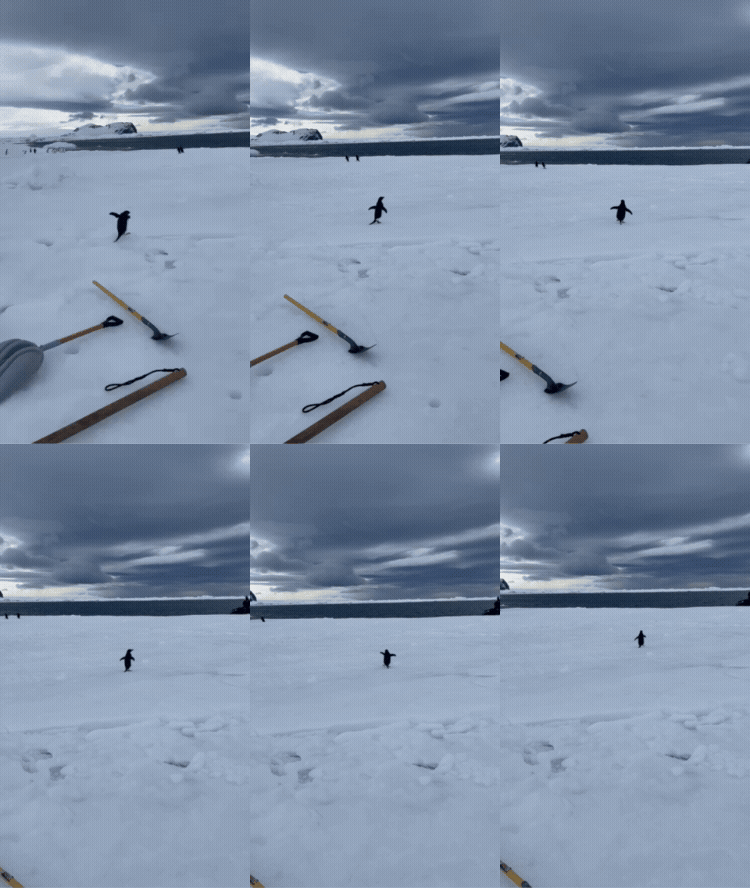
“I saw so many penguins,” Malanga said. “They're like the squirrels of Antarctica.”
The penguins often wandered directly toward the researchers while they drilled ice cores, forcing occasional interruptions to admire their unexpected visitors.
“It was really hard to get our work done sometimes because we were like, ‘Oh, penguin break,’” she said.
From images to ice floes
Before the expedition, Antarctica was something Rose Malanga mostly knew through satellite imagery.
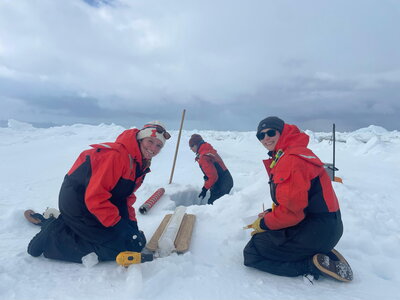
“I had never seen sea ice before this,” she said. “And now I go, and I see it, and I'm like, okay, this is what we're talking about. It's like putting a face to the name.”
That shift — from studying sea ice remotely to standing on it herself — represented years of academic and personal interest coming together.
Malanga said her interest in Earth science began early, first through geology, then evolving into oceanography and polar science. During an oceanography summer program, she became fascinated with glaciers and sea ice.
“I decided on sea ice because it kind of combined a little bit of the oceanography that I was interested in with the ice,” she said. “And I'm really interested in ice ocean interactions and like how they affect each other.”
That interest eventually led her to remote sensing, which uses satellite and radar imagery to study regions difficult to access in person.
“It's really helpful because it's hard to get there in real life,” Malanga said. “I can look at the sea ice conditions today from anywhere, which is really amazing.”
After earning a master’s degree in remote sensing from Boston University, Malanga came to Illinois specifically to work with Buckley, whose research heavily incorporates satellite imaging.
“When I found Ellen, it was really exciting to see that she was also very remote sensing focused,” Malanga said. “Having that kind of expertise to guide me as I learn how to do my own research will be really great.”
Then, unexpectedly, an opportunity opened aboard Buckley’s Antarctic expedition after another researcher had to leave the project.
Once aboard, the work quickly became hands-on. After collecting snow samples and drilling ice cores, Malanga and Buckley carefully preserved them for oxygen-isotope and salinity analyses back in Illinois — physical measurements that satellites alone cannot capture.
“The cool part is that this in-situ data might help us improve the accuracy of some remote sensing returns,” Malanga said.
Bringing Antarctica back to Illinois
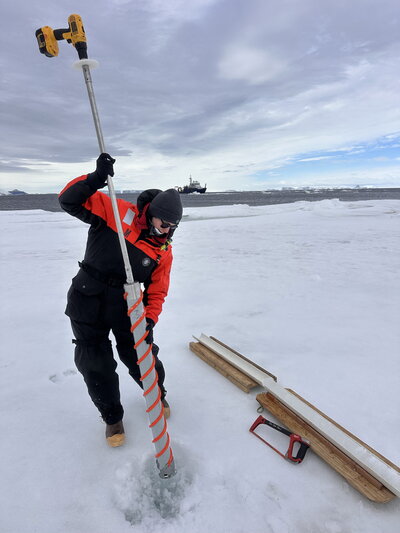
Back in Illinois, Malanga is preparing to begin analyzing the ice core samples collected during the expedition, work that will form the foundation of her dissertation’s first chapter. The samples were carefully prepared long before they reached Illinois. After drilling the ice cores, Malanga and Buckley cut them into five-centimeter sections, sealed each section in a bag, and brought them back to the ship, where they melted the ice and transferred the resulting water into airtight bottles. Keeping atmospheric oxygen out of the samples was critical because the team will use oxygen isotope measurements to help determine how and where the ice formed.
The bottles of meltwater were then shipped from Chile to Illinois, where they are now being processed in the department’s Paleoclimatology Lab. By analyzing the samples’ oxygen isotopes, salinity, and other physical and chemical properties, Malanga hopes to distinguish between different ways sea ice forms and grows — information that can ultimately help her understand how Antarctic sea ice is evolving.
Earlier this year, before the expedition, Malanga told fellow graduate students during a department seminar that conducting research in Antarctica was one of her lifelong goals. At the time, she had no idea she would accomplish it during her first year as a PhD student, let alone mere months later.
“I really thank Ellen for pushing to get me onto the trip,” Malanga said. “I've been working towards it since I was like 16. And now I'm here finally. And I got to do something I've always wanted to do. It just really feels like I'm on my way towards the career I've dreamed of.”